Snowflake: A Designer’s Real-World Embroidery Review
As someone who’s stitched hundreds of custom pieces—from boutique baby onesies to holiday market tote bags—I opened Snowflake expecting elegance, but what stood out immediately was its quiet confidence. It’s not fussy or overly intricate; it’s a balanced, centered snowflake with six clear arms, subtle tapering, and just enough interior line work to suggest depth without demanding perfection from your machine. The mood? Calm, wintry, and quietly sophisticated—ideal for handmade products where charm matters more than flash.
What It Feels Like to Stitch Snowflake on Real Fabric
Last week, I used Snowflake on a medium-weight organic cotton tote bag destined for a local craft fair. I chose a soft heather gray fabric and went with matte white thread—a classic pairing that let the design breathe. Because the file is “welded together” (as noted in the product description), there were no stray anchor points or overlapping vectors to confuse my embroidery software. That saved time during digitizing prep—no cleanup, no guesswork. The shape held clean lines even at 3.2 inches wide, which fit comfortably in a 4×4 hoop without crowding.
I also tested it on a lightweight French terry sweatshirt. Here’s where attention to stitch density really mattered: the center motif has tighter fill areas, so I added a light tear-away stabilizer underneath and slowed my machine speed by 15%. Result? Crisp satin stitch definition, no puckering, and zero thread breaks—even across the curved shoulder seam. That tells me Snowflake is built with real-world wear in mind, not just screen appeal.
Where Snowflake Shines—and Where It Needs Thought
Snowflake excels in projects where subtlety adds value: baby onesies (especially in pale blue or ivory), linen pillow covers, minimalist aprons for bakeries or coffee shops, and holiday kitchen towels. Its clean silhouette reads well at small scales—unlike some over-detailed illustrations, this one doesn’t collapse into a muddy blob when resized to 2 inches. As an embroidery file, it translates beautifully to both satin and fill stitch treatments. I ran a version as an applique design too, using the SVG layer to cut felt—another win for craft business owners juggling multiple production methods.
That said, use caution on highly textured fabrics like bouclé or thick terry cloth—the fine outer points can blur if stabilizer isn’t layered correctly. On stretchy knits (think ribbed baby caps or fitted tees), I’d recommend basting the fabric taut *before* hooping and using a cut-away + topping combo. And while Snowflake works on dark fabric, avoid ultra-fine thread colors like silver or pale gold unless you’re stitching on black or navy; they’ll lack contrast on charcoal or deep green.
How It Performs Across Your Product Line
For Etsy sellers and small shop owners, Snowflake is versatile—but not universal. It fits naturally into seasonal collections (especially November–January), but its simplicity also lets it cross over into year-round nursery decor or wedding guest favors (think embroidered handkerchiefs or sachets). As a digital embroidery file, it’s strong in mockups: the PNG and PDF files rendered cleanly in Canva and Adobe Express, making social previews look polished without extra editing.
I tested it as a patch design too—hooped on twill, stitched with dense satin borders and open-center fill. It peeled cleanly, held shape after washing, and looked professional when ironed onto denim jackets. That’s a big plus for apparel decorators building repeatable, scalable assets. Just remember: because this is listed under Illustrations and Graphics, confirm licensing terms before bundling Snowflake into a commercial embroidery kit or selling it as part of a subscription resource library.
Design Integrity in Practice
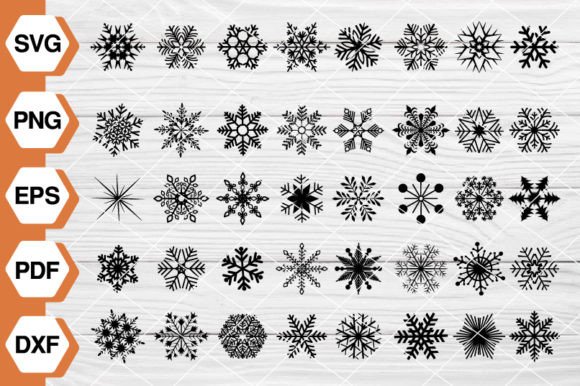
What makes Snowflake feel trustworthy—not just pretty—is how it holds up under scrutiny. No pixelation in the PNG preview. No vector distortion when scaled in Illustrator (thanks to the EPS and SVG files). The DXF imported cleanly into my CNC workflow for leather tag prototypes. Even the PDF printed sharp on letter-sized paper for client sign-offs. That consistency across formats signals thoughtful preparation—not just a quick export.
Visually, it elevates handmade presentation. Customers notice when stitching feels intentional, not automated. A well-executed Snowflake on a linen tea towel says “carefully made,” not “mass-produced.” That perception directly supports brand consistency and buyer engagement—especially for creatives selling on platforms where aesthetics drive discovery.
Practical Notes Every Embroidery Designer Should Check
- Always test first: Run Snowflake on scrap fabric matching your final project’s weight and stretch.
- Review thread color contrast: Try it in black and white mockups—some pale grays disappear on light backgrounds.
- Confirm hoop size compatibility: While it fits standard 4×4 hoops comfortably, check if your intended scale requires larger framing.
- Inspect small details: Zoom in on the outer tips—do they taper cleanly? (They do—no jagged ends.)
- Use proper stabilizer: Light to medium cut-away for stable wovens; cut-away + topping for knits.
- Verify commercial use rights: Since this is a digital embroidery file sold as a standalone graphic, review license terms before applying to finished goods you plan to sell.
- Compare fabric backgrounds: Test on both light and dark swatches—stitch density affects visibility more than line weight alone.
In short: Snowflake isn’t just another holiday graphic. It’s a considered, production-ready machine embroidery design that respects your time, your machine, and your customer’s expectations. Whether you’re prepping personalized gifts, building a cohesive small shop product line, or sourcing reliable design assets for client work, it delivers quiet reliability—exactly what seasoned makers look for.