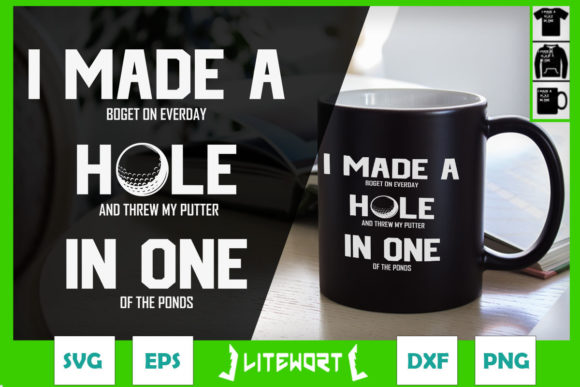
Hole in One Golf Gag
Let’s be honest—I opened the Hole in One Golf Gag download expecting something cheeky, but not much more. What I found was a surprisingly well-balanced embroidery file that lands right where it needs to: playful without being juvenile, golf-themed without being niche-locked, and clean enough to hold up on real-world projects. As someone who’s stitched hundreds of designs for clients—from boutique baby onesies to custom golf league apparel—I judged this one not by its ZIP contents, but by how it would behave under needle and thread.
A Tote Bag Test That Felt Like Real Life
Last week, I prepped a set of canvas tote bags for a local golf fundraiser. The organizer wanted light humor—no clichés, no over-the-top puns—and something that wouldn’t get lost on a busy fabric surface. I loaded Hole in One Golf Gag into my embroidery software and sized it to 3.8" wide (a safe sweet spot for medium-weight canvas). Instantly, I noticed the layout: a compact golf ball mid-air, a minimalist flag with a subtle “1”, and clean, rounded lettering that reads “Hole in One” with just enough bounce to feel like a wink—not a shout.
This isn’t a dense fill-stitch monster. It leans into open shapes and confident line work—ideal for satin stitch outlines and light fill areas. That means less thread buildup, less risk of puckering on natural fibers, and faster stitch-out times. For a craft business turning around 20–30 personalized totes per weekend? That efficiency matters.
Where It Shines—and Where You’ll Want to Pause
Hole in One Golf Gag thrives on structured, stable surfaces: cotton twill aprons, medium-knit sweatshirts, denim jackets, and tea towels with tight weaves. On those, the design reads clearly at 3–4" wide, and the contrast between bold shapes and airy negative space gives it visual breathing room—even when stitched in monochrome thread.
But here’s what I watched closely:
- Small hoop sizes: Don’t force it below 3". The “1” in “One” and the flagpole detail start to blur if scaled too far down—especially on textured fabrics like terry cloth or heavy fleece.
- Stretchy fabric: Use cutaway stabilizer, not tear-away. The curved lines and slight taper in the golf ball rely on stability; without it, you’ll see distortion near the edges.
- Dark fabric: The design doesn’t include drop shadows or outlines by default—so test your thread color first. A soft lime or crisp white pops beautifully, but navy-on-black can mute the playfulness.
- Curved surfaces: Caps and beanies? Possible—but only with proper cap hoops and careful digitizing adjustments. The current files are flat-layout graphics, not pre-digitized embroidery files. You’ll need to convert or adapt them before stitching.
What It Adds to Your Handmade Product—Beyond the Stitch
As an embroidery designer, I don’t just ask *“Will it stitch?”* I ask *“Will it make the customer smile twice?”* First when they see it—and again when they realize how thoughtfully it’s executed.
Hole in One Golf Gag delivers that second moment. Its simplicity reads as intentional, not lazy. That builds trust—especially for Etsy sellers listing personalized gifts or small shop owners curating holiday bundles. A dad receiving a golf-themed kitchen towel with this design stitched cleanly in tonal gray thread feels seen. A bride handing out “golf caddy” aprons to her wedding party? This design adds wit without undercutting elegance.
It also works quietly for brand consistency. If your craft business uses a cohesive palette—say, sage, charcoal, and cream—this design adapts without needing recoloring or redesign. That saves time across mockups, listings, and production.
Practical Designer Notes Before You Stitch
You’ve got SVG, PNG, DXF, and EPS files—that’s great for flexibility. But remember: these are graphics, not machine embroidery files. If you’re new to digitizing, don’t assume they’ll load straight into your embroidery machine. You’ll need to convert them using software like Wilcom, Embrilliance, or even Inkscape + PE-Design plugins.
Before committing to a full run:
- Test on scrap fabric matching your final product—same weight, same stretch, same dye lot if possible.
- Check stitch density in the flag and lettering zones. Overly tight fills on small details can cause thread breaks or fabric stress.
- Run black-and-white mockups. Does the shape read clearly without color? It should.
- Compare how it looks on light vs. dark backgrounds. Some details vanish on low-contrast pairings.
- Verify stabilizer choice: cutaway for knits, tear-away for stable wovens, fusible for lightweight linens.
- Confirm licensing terms. Since this is labeled as a digital embroidery file for Crafts and Graphics, double-check whether commercial use—including selling finished embroidered items—is permitted.
Final Thought: A Design That Serves the Project, Not Just the Theme
There are dozens of golf-themed embroidery files online. Most lean hard into cartoonishness or cluttered detail. Hole in One Golf Gag stands out because it respects the craft—not just the concept. It leaves room for thoughtful thread choices, smart placement, and confident execution. Whether you’re stitching a baby onesie for a golf-loving uncle, building a line of boutique kitchen goods, or prepping holiday gifts for your Etsy shop, this design supports your intention instead of competing with it.
It won’t carry your entire product line—but used well, it becomes a quiet signature piece. And in handmade work, those are the details people remember.